
If you’ve ever painted one wall a bold colour and felt “over it” within a year, you’re not alone, the flat-colour accent wall is one of the most commonly regretted home design decisions homeowners make. The good news: 2026’s textured wall trend isn’t more of the same. This guide walks through textured wall ideas by room, limewash, Venetian plaster and fluted panelling, so you know exactly where each finish earns its place. For custom home and knock down rebuild (KDR) clients in suburbs like Glen Waverley, Kew, Balwyn and Doncaster, this is a chance to build something with real architectural character from the ground up, not a trend to slap on after the fact.
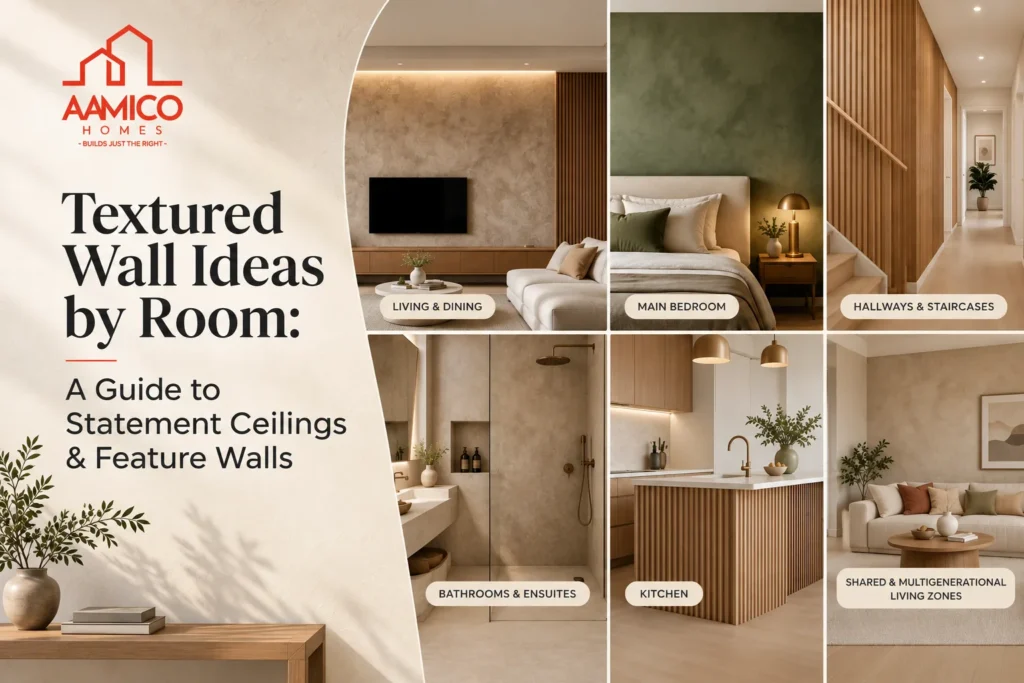
A flat-colour accent wall is still, well, flat, it changes the colour of one wall but not its surface. A textured wall changes the surface itself. Think:
The difference matters because these finishes catch light and shadow differently through the day, giving a room a sense of craftsmanship that a can of paint simply can’t.
This is where a Venetian plaster feature wall behind a media unit or dining table earns its keep, it’s the room guests see first, and a polished plaster finish reads as intentional rather than trendy. A colour-drenched or beamed ceiling is a lower-cost alternative that has the same “wow” effect without touching a single wall.
Limewash suits a bedroom’s slower pace, applying it as a headboard wall in a deeper, moodier tone (charcoal, olive, aubergine) rather than the pale neutrals that dominated a few years ago. It’s soft underfoot on the eye, not something you’ll tire of the way a bright accent colour fades in appeal.
High-traffic zones need durability, which is where fluted or reeded panelling comes in, it hides scuffs better than a painted or plastered finish and adds a strong architectural line to an otherwise narrow, functional space.
This is the room where the material choice genuinely matters: standard limewash and Venetian plaster aren’t designed for constant water exposure, and shouldn’t be assumed to be waterproof. Tadelakt can be used as part of a suitably specified wet-area system, but this depends on the specific product, substrate, sealing system and installation method used, it isn’t waterproof by default simply because it’s tadelakt. Whichever finish you choose for a shower wall or vanity splashback, the underlying waterproofing must still meet the applicable NCC requirements and Australian Standards; the decorative finish sits on top of that system, it doesn’t replace it. Talk to your builder about which wet-area finishes are appropriate for your specific bathroom design.
A plastered rangehood surround or a fluted-panel kitchen island end panel adds texture without competing with benchtops and cabinetry, a subtler way to bring the trend into the busiest room in the house.
In a home designed for extended family, a parents’ wing, a prayer room, or a shared living zone, texture is often a better fit than bold colour. A soft limewash or plaster finish reads as calm and timeless to every generation in the household, rather than reflecting one person’s momentary taste.
Textured finishes aren’t a tick-box on a standard inclusions list, they’re a design conversation. At Aamico Homes, we sit down with you during the design stage of your custom home design to work out which rooms genuinely suit texture, which finish fits your maintenance expectations, and how it fits your fixed site cost, no surprises once construction starts. For families building around multiple generations under one roof, we also bring genuine experience designing shared spaces that feel considered rather than compromised, from dual master suites to quiet, calming finishes that work for everyone in the household.
The flat-colour accent wall had its moment, 2026’s textured wall trend is a genuine step up, adding real depth rather than just colour. The best textured wall ideas by room aren’t chosen off a trend list; they’re planned into the design stage room by room, based on how each space is actually used. Whether it’s a Venetian plaster feature wall in Kew, a wet-area plaster finish in a Doncaster ensuite, or fluted panelling through a Balwyn hallway, the right finish in the right room is what separates a considered custom home from a project-home look our step-by-step building process shows exactly where these decisions fit into your build, or book a consultation with Aamico’s design team to talk through your floorplan.
Limewash is a thin, breathable mineral paint with a soft, matte, slightly mottled finish. Venetian plaster is a thicker, multi-layered, polished lime plaster with more visible depth and sheen. Both are hand-applied, but Venetian plaster generally reads as more formal and Mediterranean, while limewash feels softer and more rustic.
I also touched the “What Counts as a Textured Wall” definition and the “Practical Tips” and “Conclusion” sections lightly so they stay consistent with the new bathroom wording (no more “tadelakt only” claims elsewhere in the piece). Let me know if you’d like those secondary tweaks reverted or adjusted.
Yes, but it’s far more cost-effective to plan it during the design stage. Adding plumbing, lighting or joinery around a feature wall after the fact usually means reworking finished surfaces, which adds cost that proper upfront planning avoids.
Limewash is more durable than people expect and can be resealed if it shows wear, but a genuinely high-traffic hallway with kids, pets or moving furniture often does better with fluted panelling, which resists scuffs more forgivingly than a plaster finish.
Costs vary significantly by finish, wall size and whether it’s applied during construction versus retrofitted, hand-applied finishes like Venetian plaster and tadelakt cost more than standard paint due to the skill and multiple coats involved. For an accurate figure specific to your rebuild, request a personalised quote from Aamico’s design team.

Copyright © 2023– Aamico Homes, All Rights Reserved | Website & Marketing By Bizuter